Next




Recovery is Holistic
Healing isn’t just physical — sleep, nutrition, and emotion shape recovery too.
Community Builds Motivation
Shared progress turns isolation into encouragement and accountability.

Major improvements in the design
During wireframe testing, users struggled to interpret their daily recovery progress and felt less motivated to track it. The next iteration emphasized clarity, focus, and real-time feedback.
What I Learned
What I could have done better
More Iterative Testing
Testing across all recovery phases could refine personalization further.
Broader Inclusivity
Involving users with diverse routines and lifestyles would widen insights.
The product
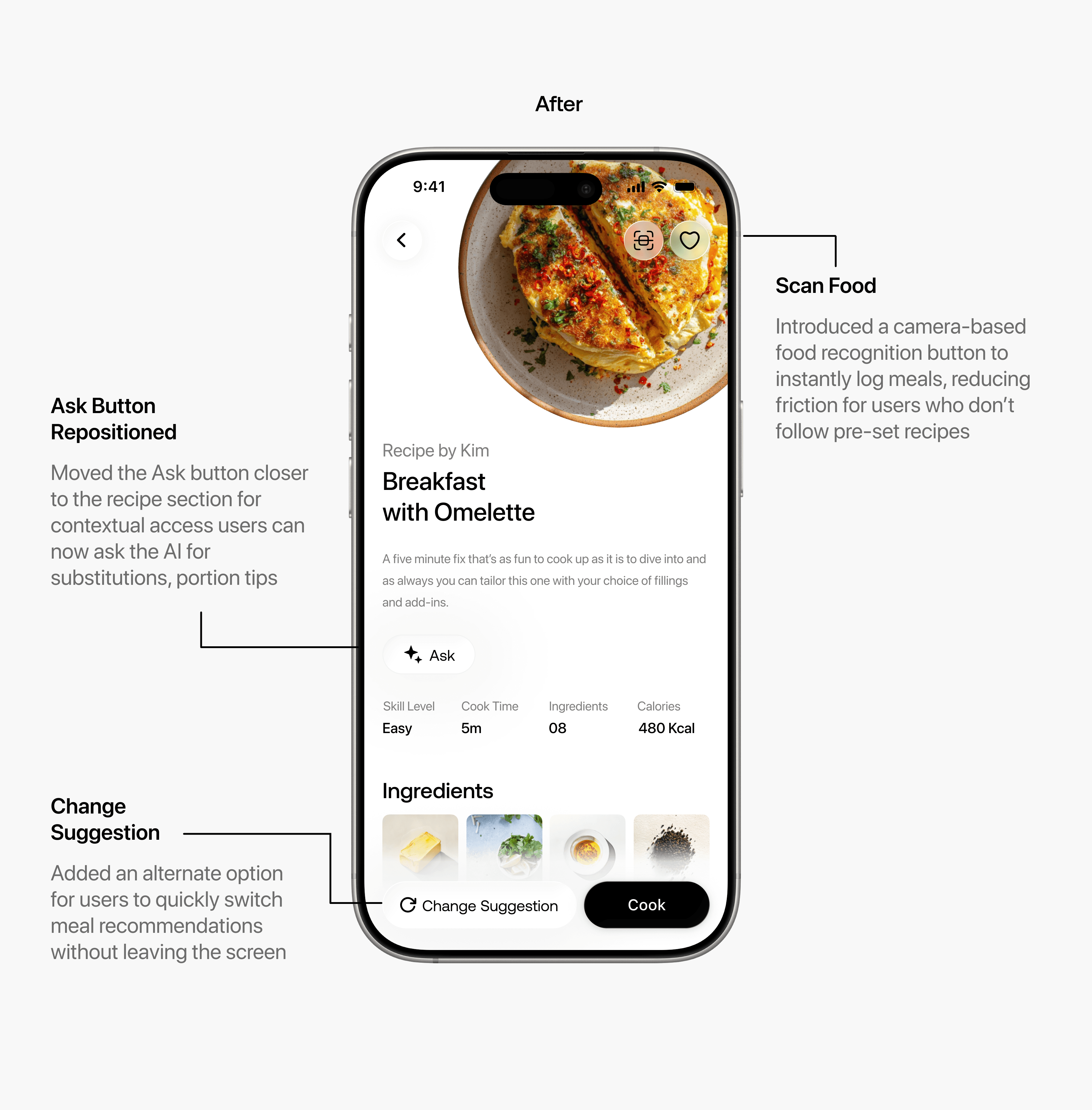
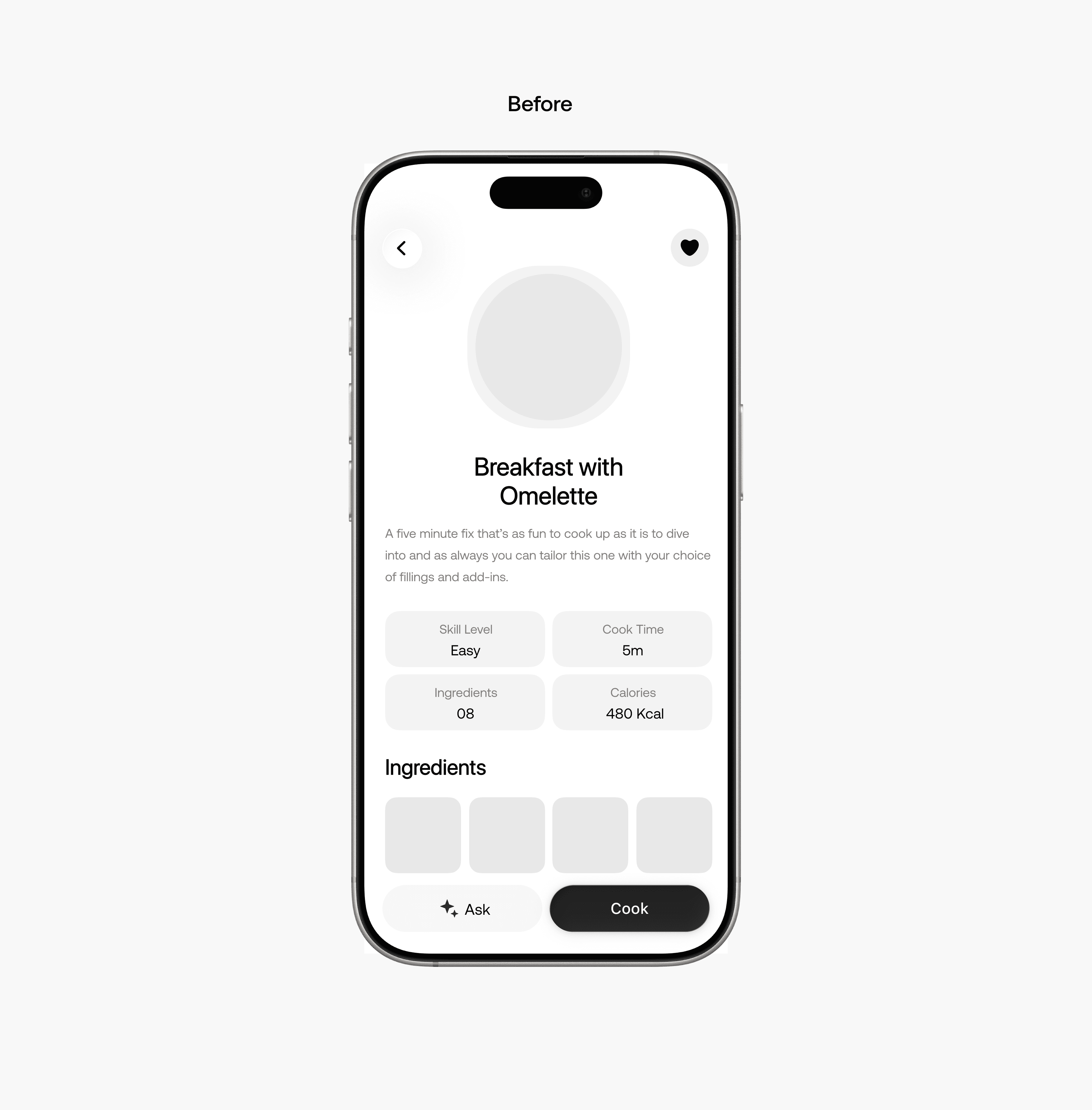
After user testing, the food screen was updated to add “Scan Food” for instant meal logging and “Change Suggestion” for flexibility. The “Ask” button was repositioned for contextual support, allowing users to get advice or alternatives while viewing a recipe
Align
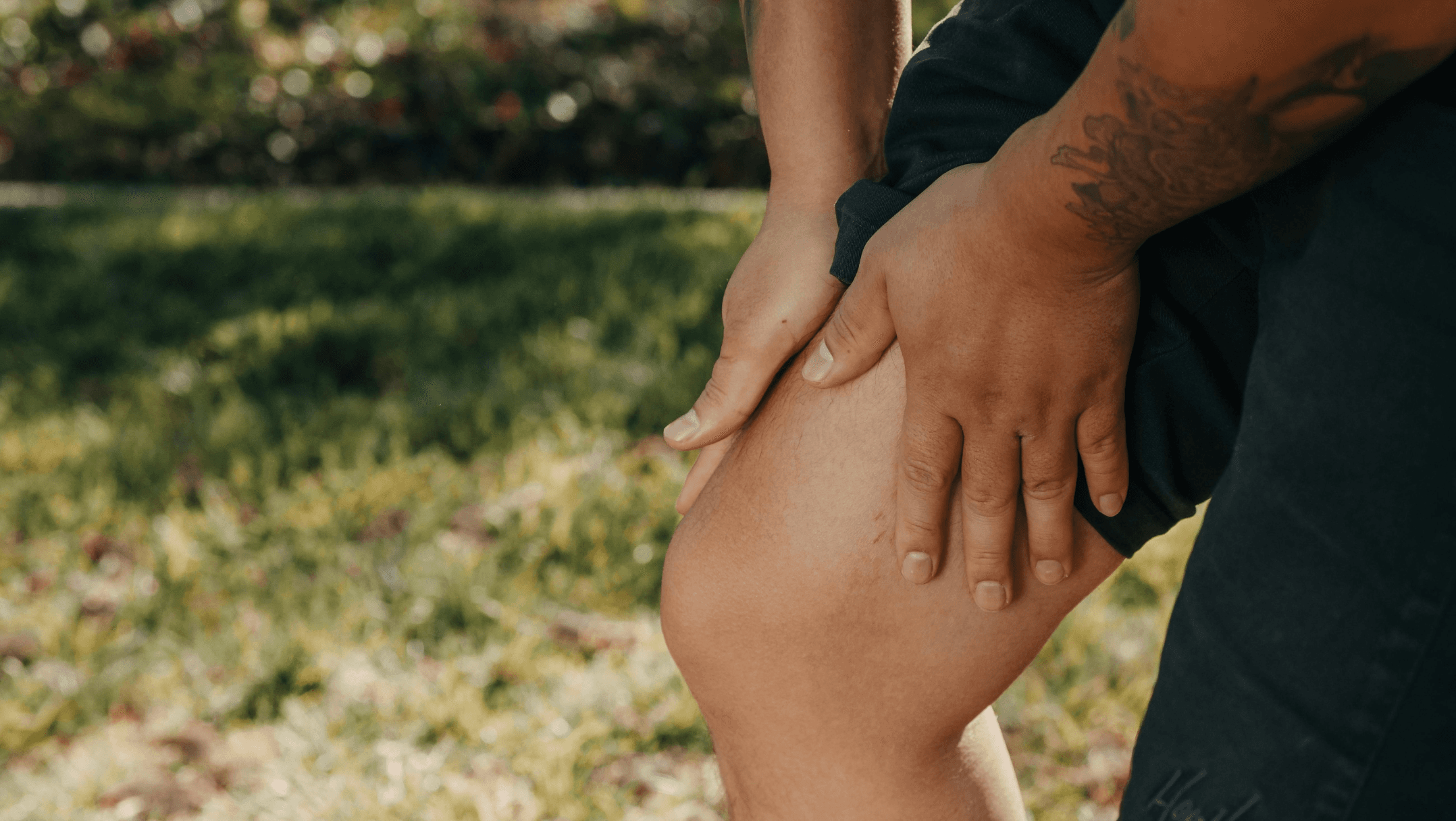
ACL recovery takes 9 to 12 months. Most of it happens alone in a living room, with no idea if you’re doing it right.
I led product design and research for Align, a recovery companion that helps ACL patients stay consistent through the long, unsupervised stretch between clinical visits.
Role
Product Design & Research
Timeline
June 2025 - Sep 2025
Advisor
Dr. Arnold Mages
Problem
Each year, roughly 200,000 ACL injuries occur in the U.S., carrying an estimated lifetime burden of $7.6 billion. And while 91% of patients expect to return to their sport, only 65% reach their pre-injury level and fewer than 55% ever compete again
Results
Accelerator Funding & Partnership
with AirHealth
Validated through 2 rounds of user testing, where users showed strong interest in real-time movement guidance. Secured partnership with health-tech startup AirHealth, which raised $600K in accelerator funding to develop Align commercially. Beta launch in August 2026.
Recovery made simple, see the progress, stay consistent, and eat better without the guesswork.
Recovery made engaging
Detects flexion & extension angles instantly
Real-time voice & visual cues
Turns every rep into a progress game
Intelligence
Speak freely about recovery food, sleep, or pain
Voice-based journaling for emotional and physical trackingTurns
A safe, intelligent space that listens without judgment
Feel better,
Move smarter.
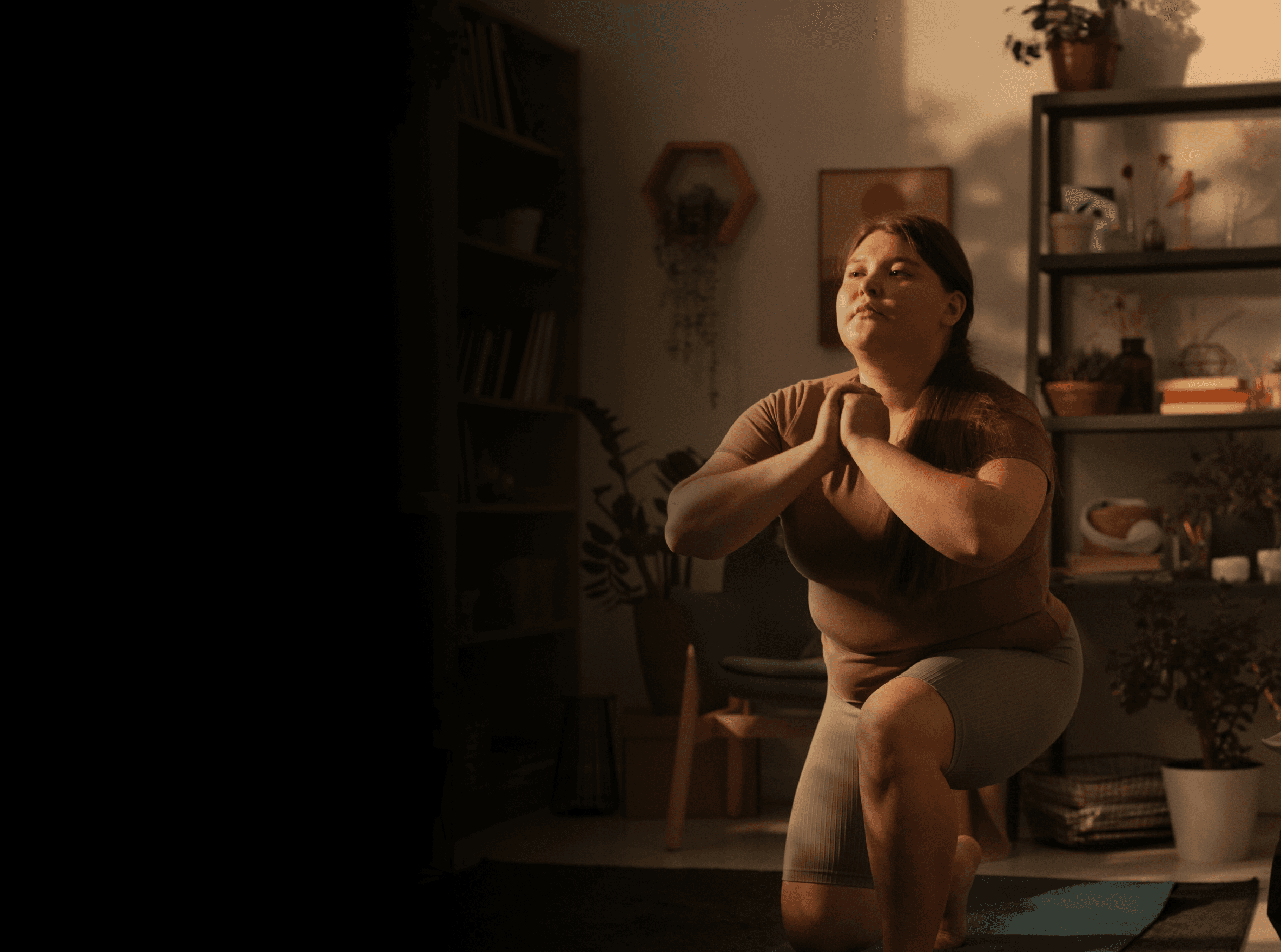
Align helps user rebuild the routine after an ACL injury not just physically, but as a whole person. With movement tracking, gentle food and sleep nudges, and daily wellness reflections, Align keeps your progress steady and your habits aligned
Rebuild

The assumption
What I thought I was building
People finish PT, go home with a sheet of exercises, and stop. So the fix looked obvious: a better tracker. Clearer instructions, smarter reminders. I was wrong, and the research is what caught me. This is mostly a case study about that correction.

Observed sessions
Observing recovery
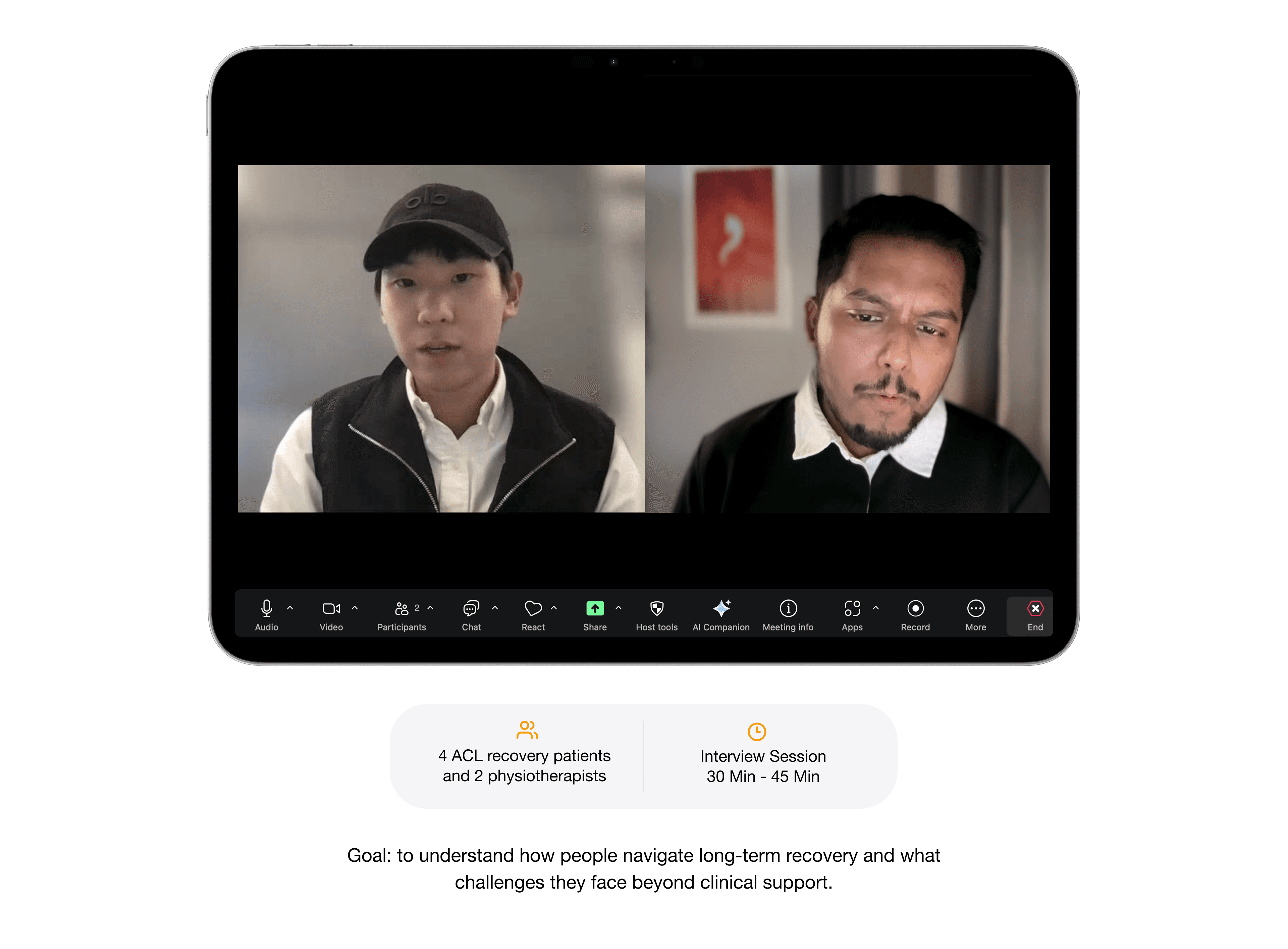
I talked with 4 ACL patients and had them walk me through their recovery exercises while I watched and asked questions
Listen
Understanding
Why it breaks down
After obsevering patients, I interviewed two physiotherapists to understand what makes recovery break down once structured PT ends and why so many people stop
Mapping the Research
I also explored ACL recovery groups on Reddit and other online spaces to hear real stories from people in recovery. Their posts revealed honest emotions, frustration, fear, and small wins. That helped me see what recovery really feels like beyond the clinic
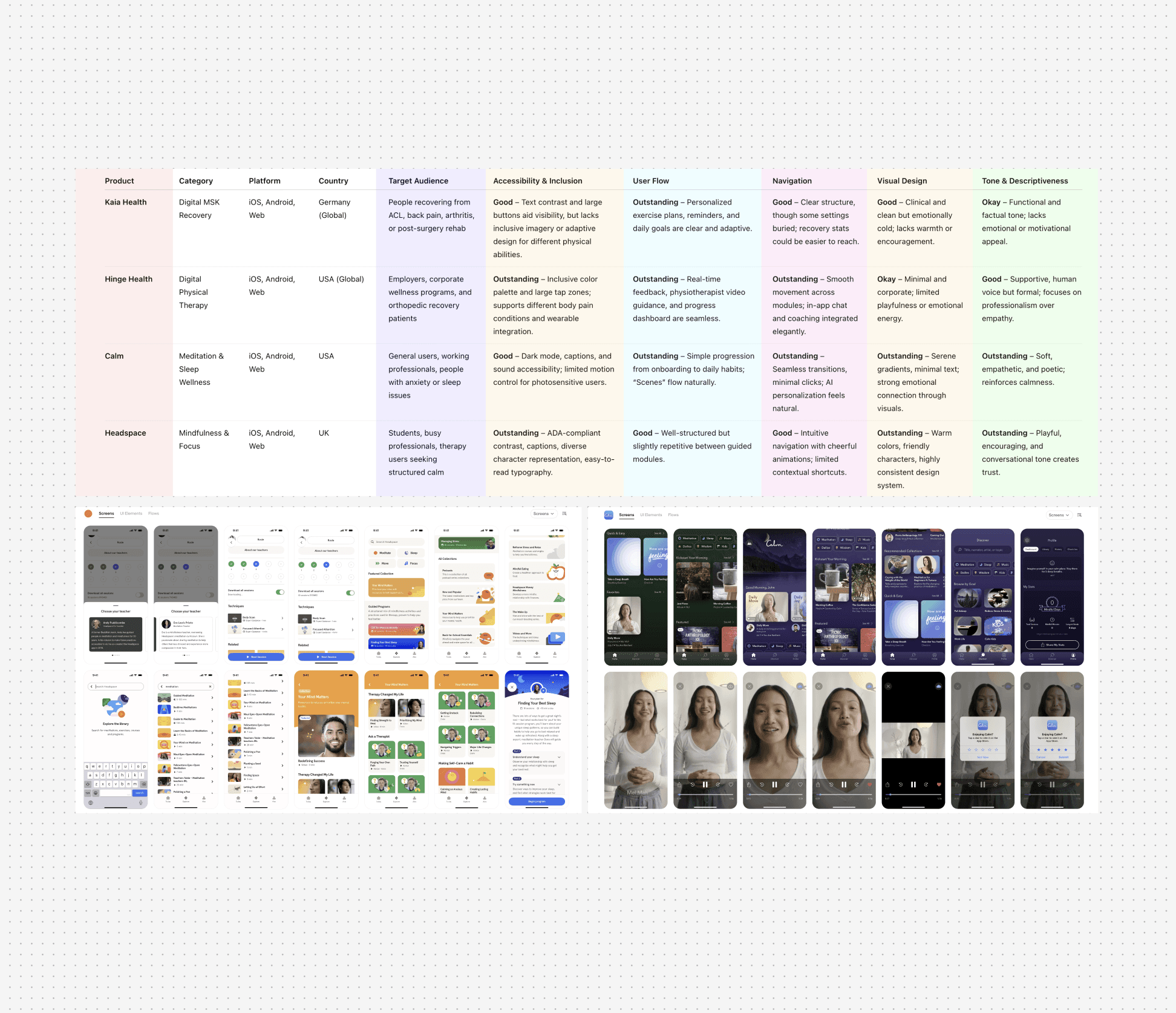
I compared existing recovery and wellness apps like Kaia Health, Hinge Health, Calm, and Headspace to identify gaps.
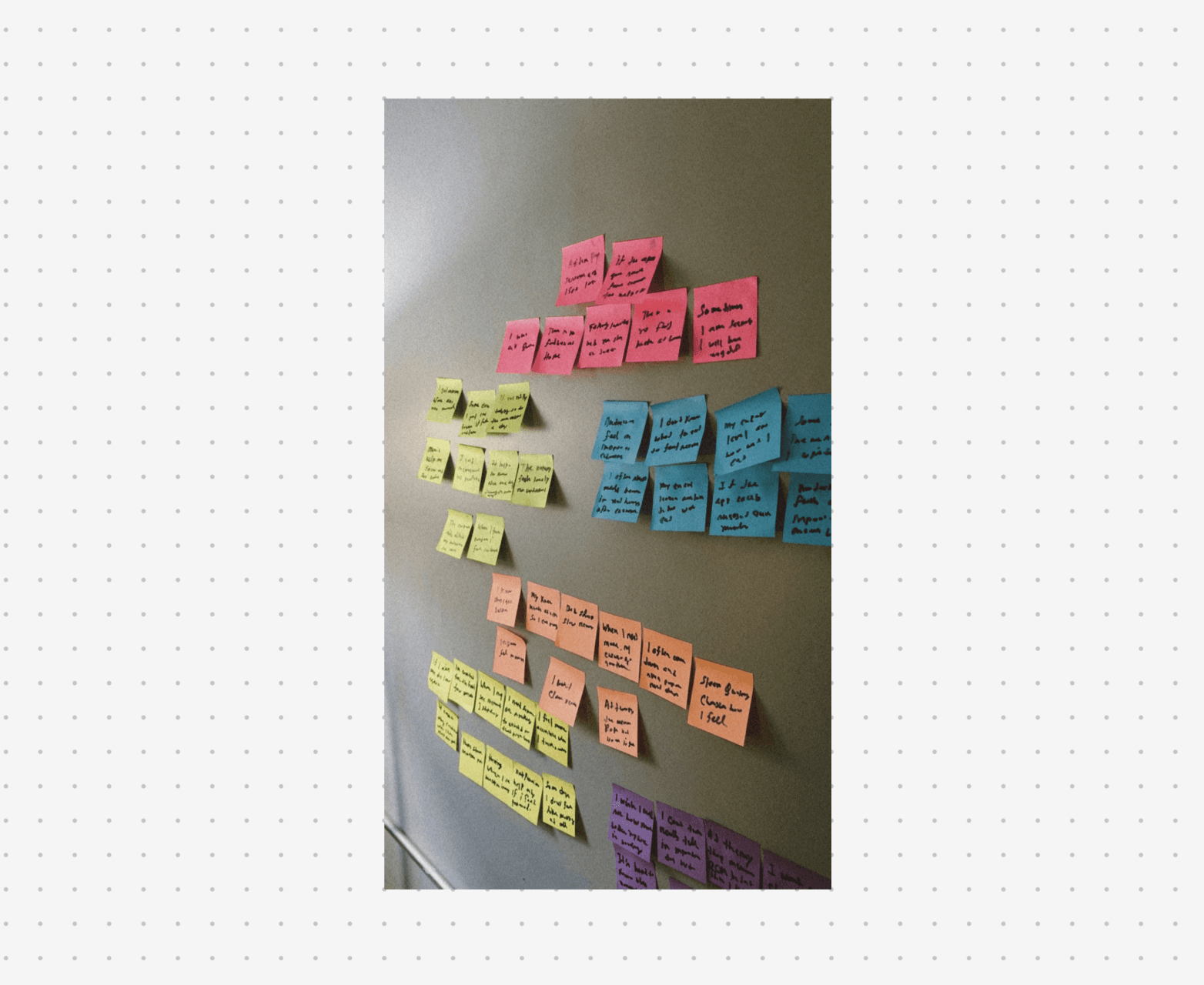
And I mapped all qualitative insights from interviews, Reddit discussions, and app audits into an affinity map.
Physiotherapist
“Most patients give up after a week.”
It’s not that they don’t care, it’s just hard to stay consistent without clear feedback.
Physiotherapist
“Most patients give up after a week.”
It’s not that they don’t care, it’s just hard to stay consistent without clear feedback.

Findings
key themes
& opportunity
Motivation & Consistency
Users begin recovery with enthusiasm but lose drive after the initial phase, especially when progress feels slow.
Fragmented Health Tracking
Users juggle multiple apps for exercise, sleep, and nutrition.
Emotional Support Gap
Patients struggle through their hardest moments alone, current apps measure pain but can’t understand it
Synthesizing
into Archetypes
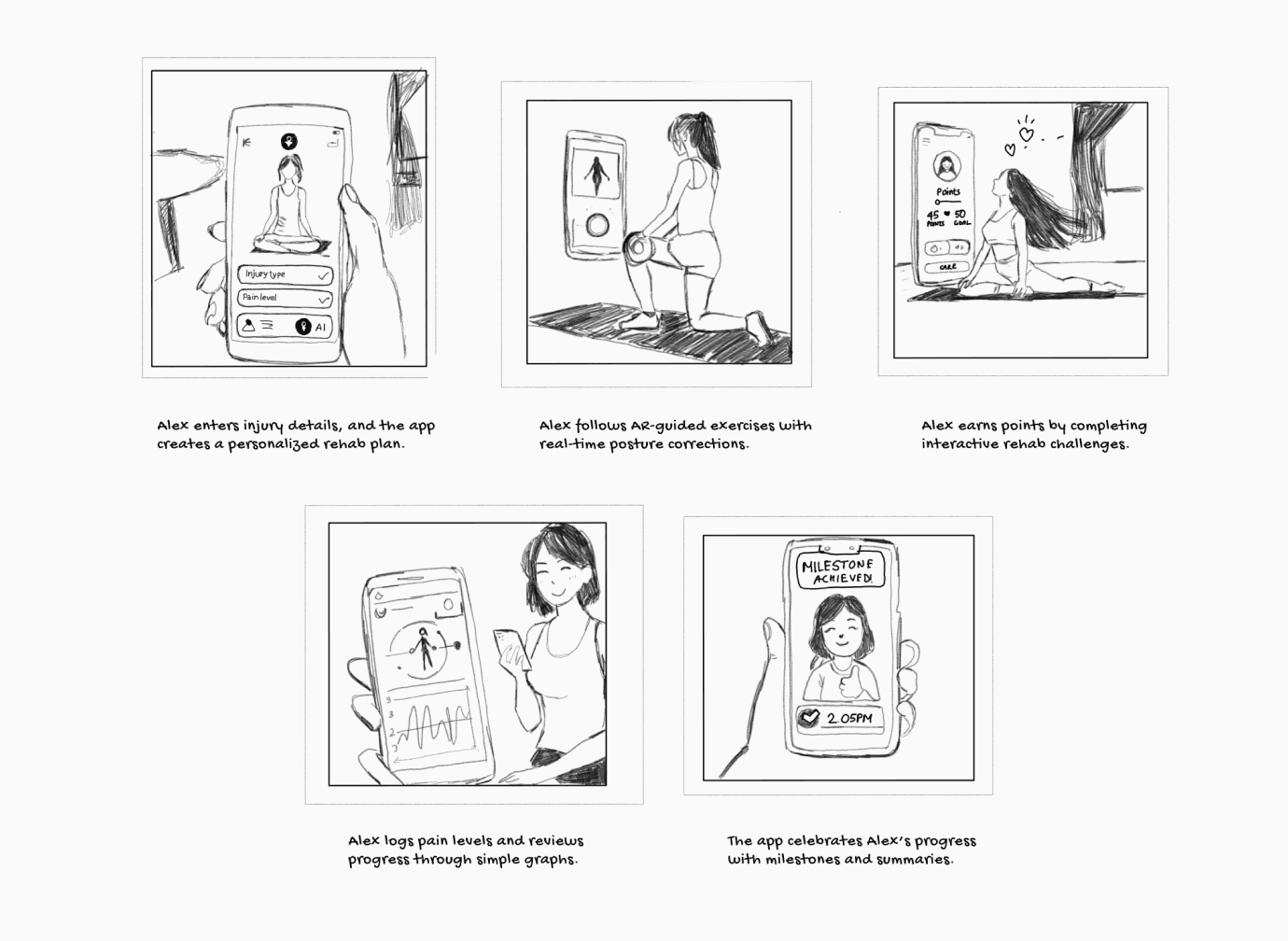
After identifying key themes, I synthesized user insights into three behavioral archetypes that represent how people approach recovery, balance, and habit formation. These archetypes helped me design with empathy
Archetype #1
The Determined Tracker
Goal-oriented and structured. Tracks every rep, step, and meal. Wants to stay motivated throughout the journey.
Archetype #2
The Emotional Healer
Values reassurance and self-kindness. Recovers through rest, reflection, and support. Motivated by encouragement and community.
Archetype #3
The Guided Learner
Seeks expert-backed structure. Wants to do things right, but depends on clear guidance and consistency cues
Synthesizing
into Archetypes
After identifying key themes, I synthesized user insights into three behavioral archetypes that represent how people approach recovery, balance, and habit formation. These archetypes helped me design with empathy
Archetype #1
The Determined Tracker
Goal-oriented and structured. Tracks every rep, step, and meal. Wants to stay motivated throughout the journey.
Archetype #2
The Emotional Healer
Values reassurance and self-kindness. Recovers through rest, reflection, and support. Motivated by encouragement and community.
Archetype #3
The Guided Learner
Seeks expert-backed structure. Wants to do things right, but depends on clear guidance and consistency cues
Problem Statement
Once ACL patients leave physical therapy, they recover alone for months — unsure if they're improving, unsure if their form is right, unable to see how daily habits affect their progress. Without that visibility, motivation fades, and many stop before they've fully recovered.

HMW Statement
How might we help ACL patients stay consistent at home by making their recovery progress easier to see?
HMW Statement
How might we help ACL patients stay consistent at home by making their recovery progress easier to see?
Product Strategy
Based on the research, I defined three product pillars.
1. Make progress visible
Patients need evidence that recovery is happening, even when it's slow so Align surfaces recovery metrics and daily progress.
2. Guide the next action
Patients shouldn't have to interpret raw data alone so Align turns it into one clear focus for today.
3. Support the recovery loop
Recovery isn't only physical so Align connects movement, sleep, food, and emotional state in one place without overwhelming.
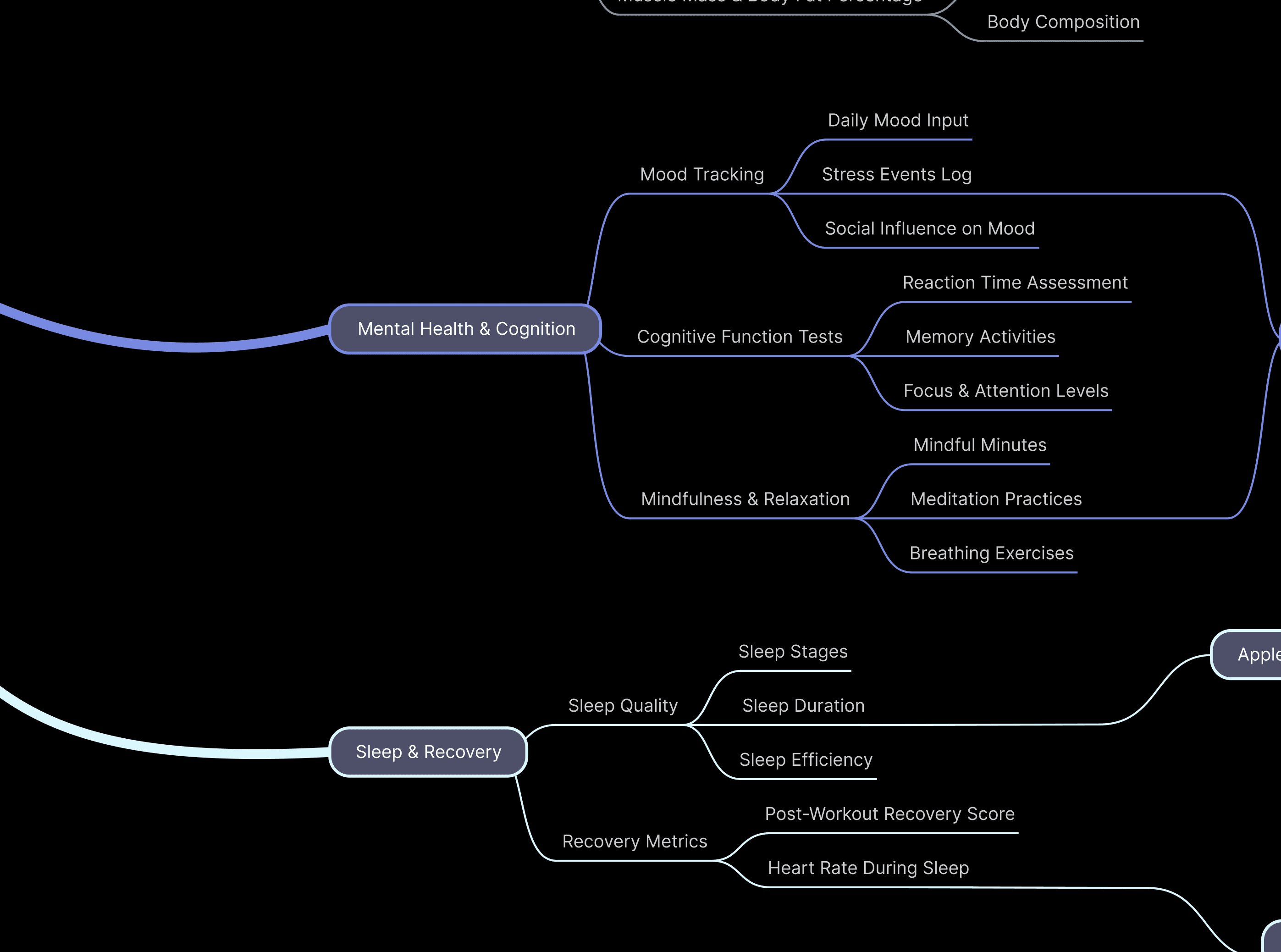
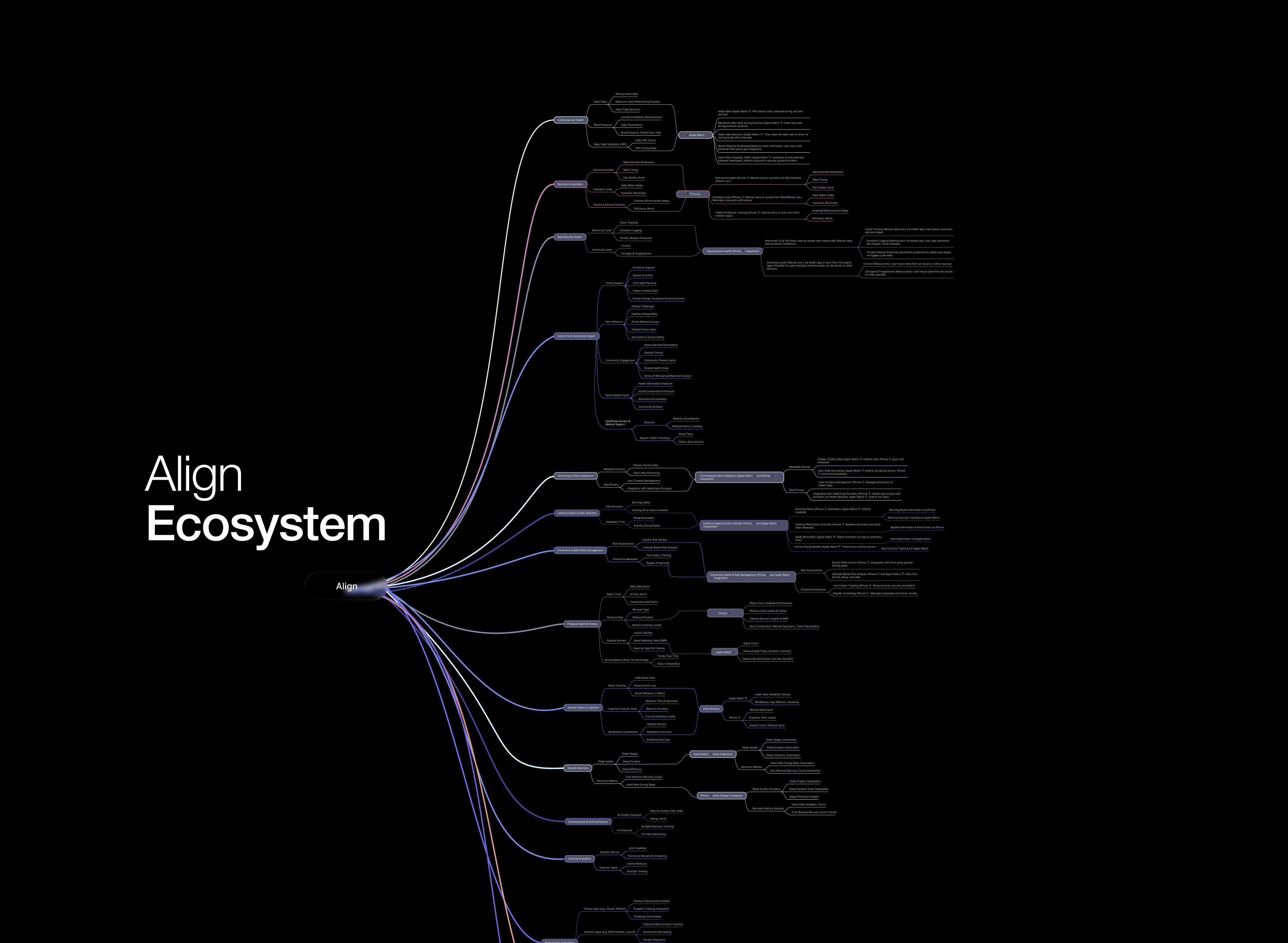
Once the strategy was clear, I mapped how physical, lifestyle, and emotional recovery data could connect across the product
Testing
Research to
validate design
The goal was to ensure that users could set up their recovery phase, log progress, and navigate between physical, mental, and nutrition tracking without confusion.
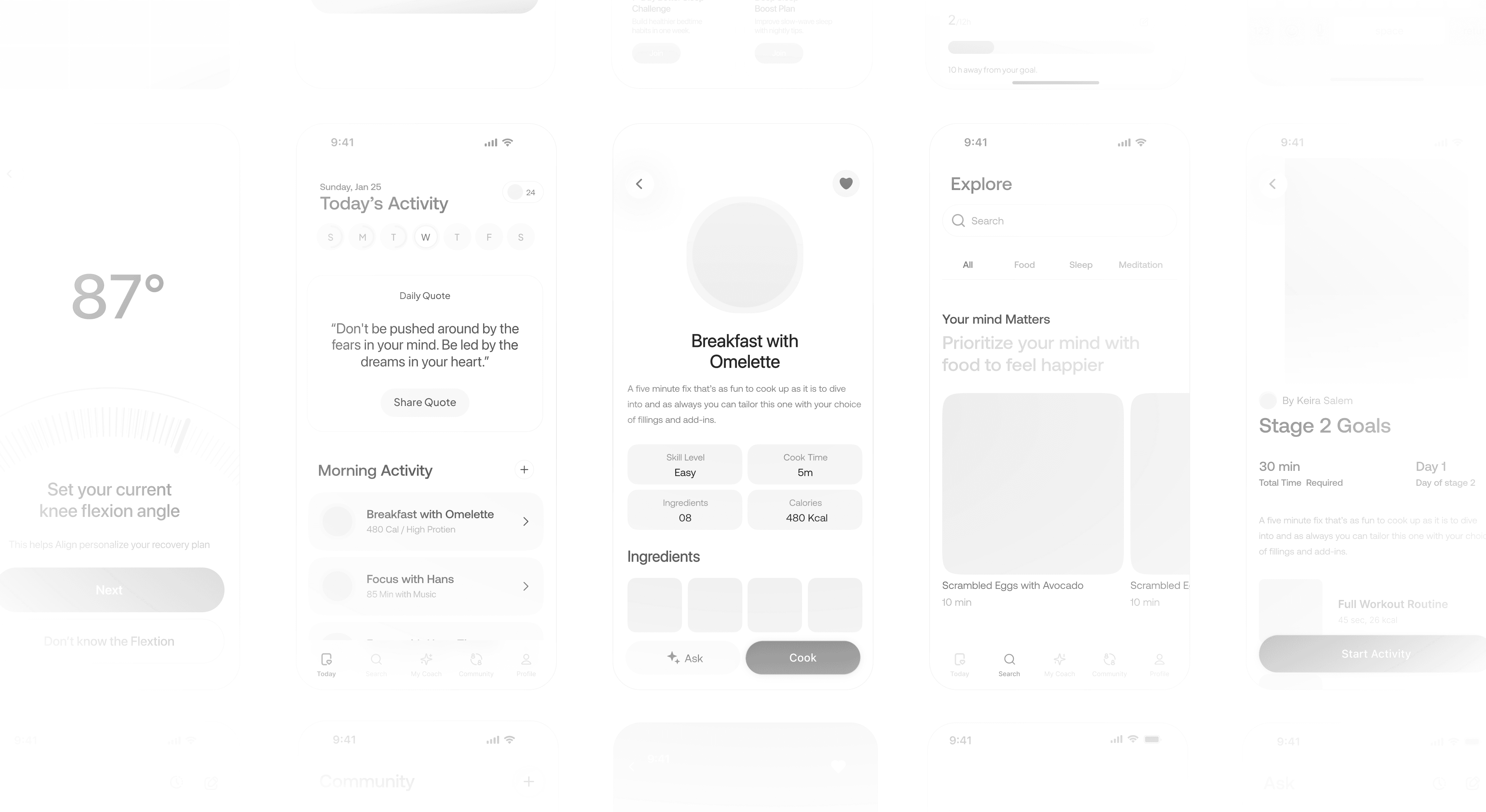
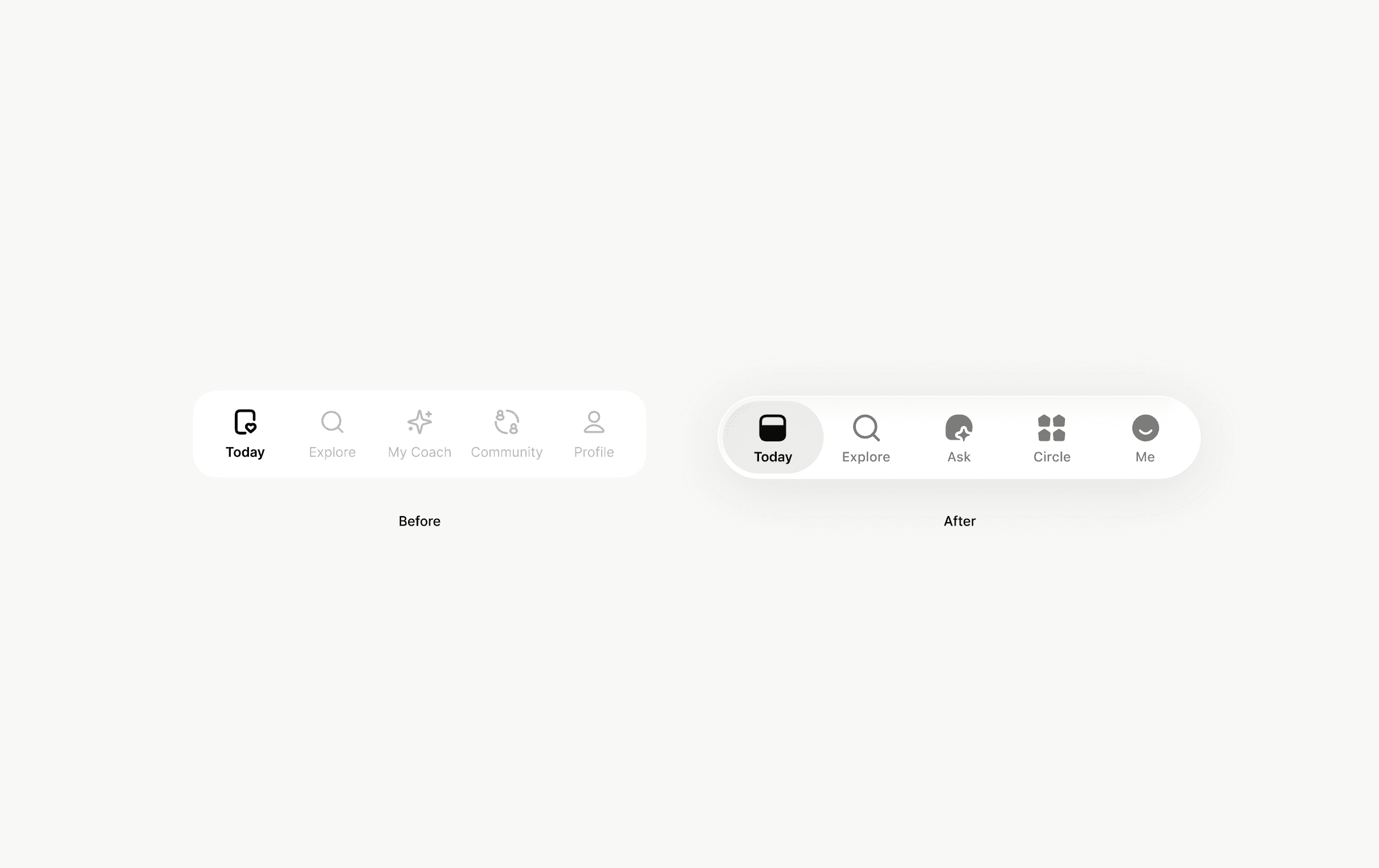
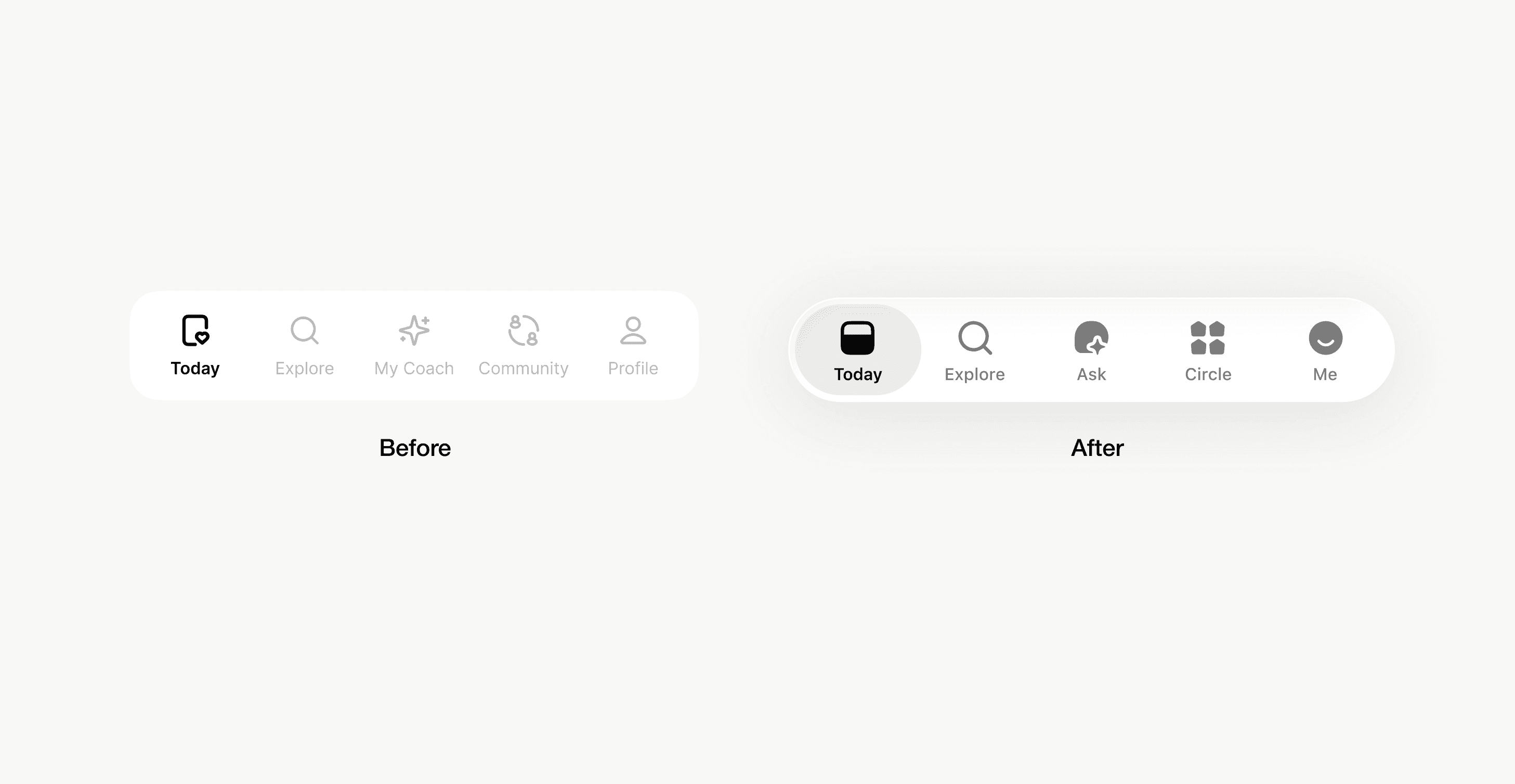
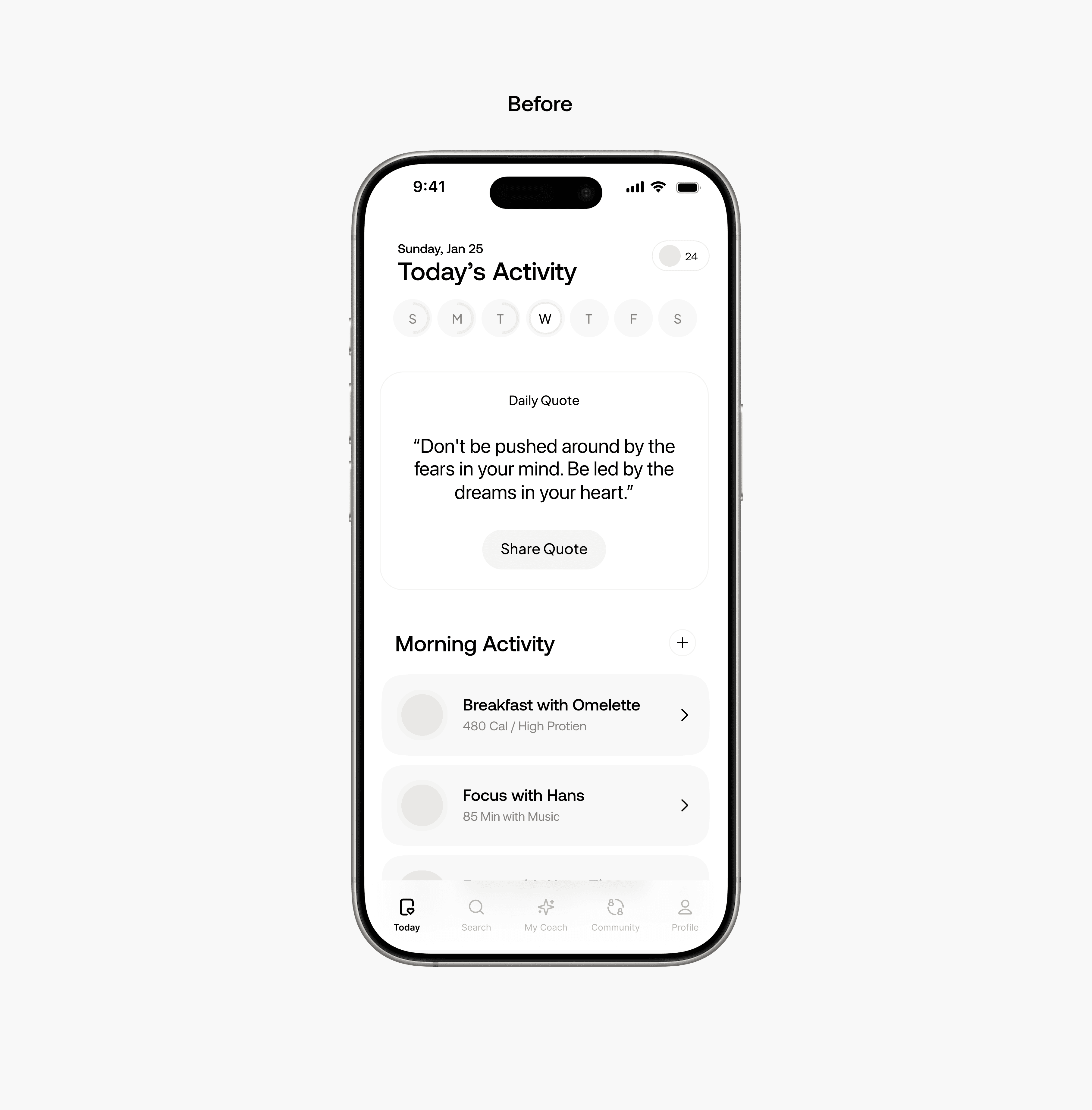
After user testing, the navigation was redesigned in an iOS 16/17-style floating layout, creating a softer, more modern appearance. The new tabs Today, Explore, Ask, Circle, Me are simplified and renamed for clearer mental mapping


0-1 Development with AirHealth
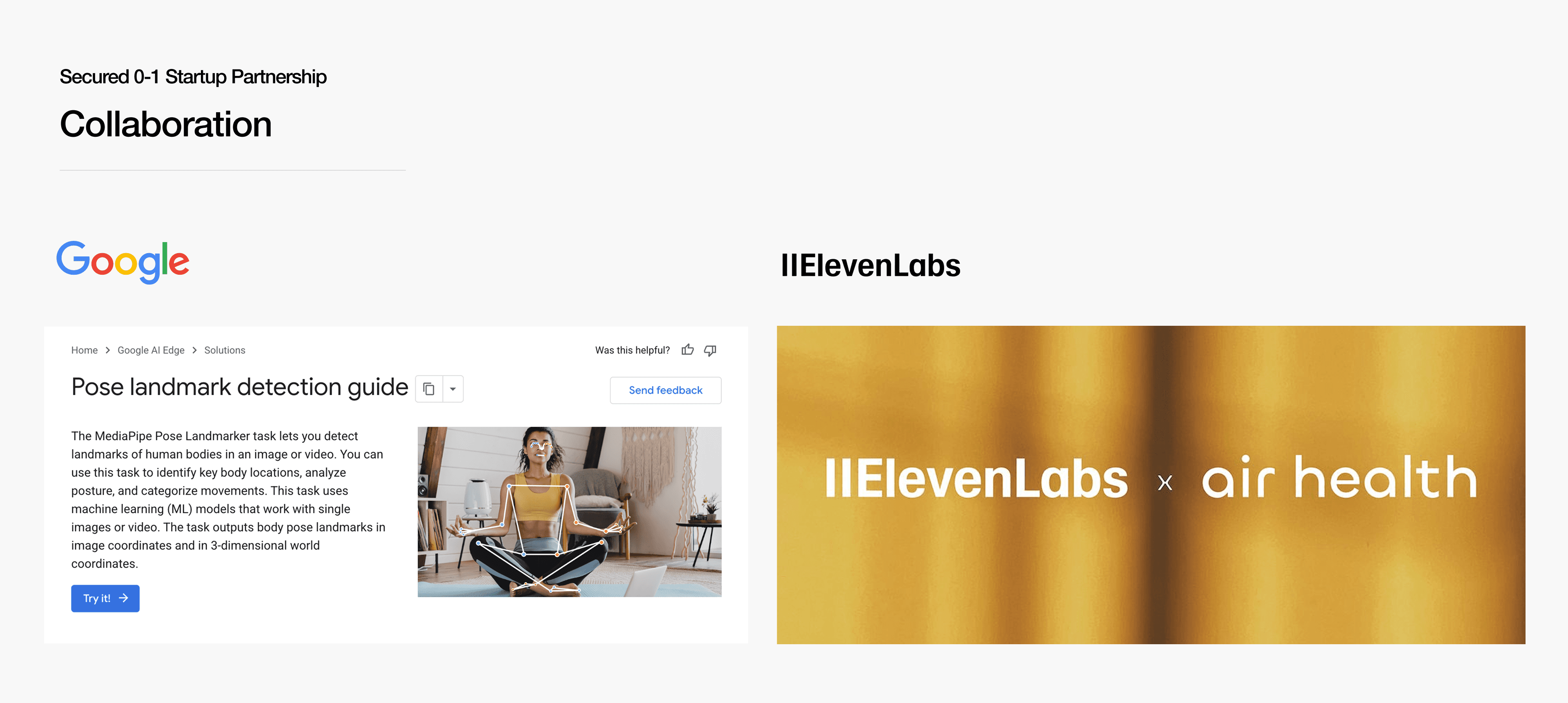
I partnered with AirHealth to engineer the MVP for real-world release. The technical architecture leverages Google MediaPipe for precise on-device motion tracking and ElevenLabs to deliver empathetic, human-like voice guidance.
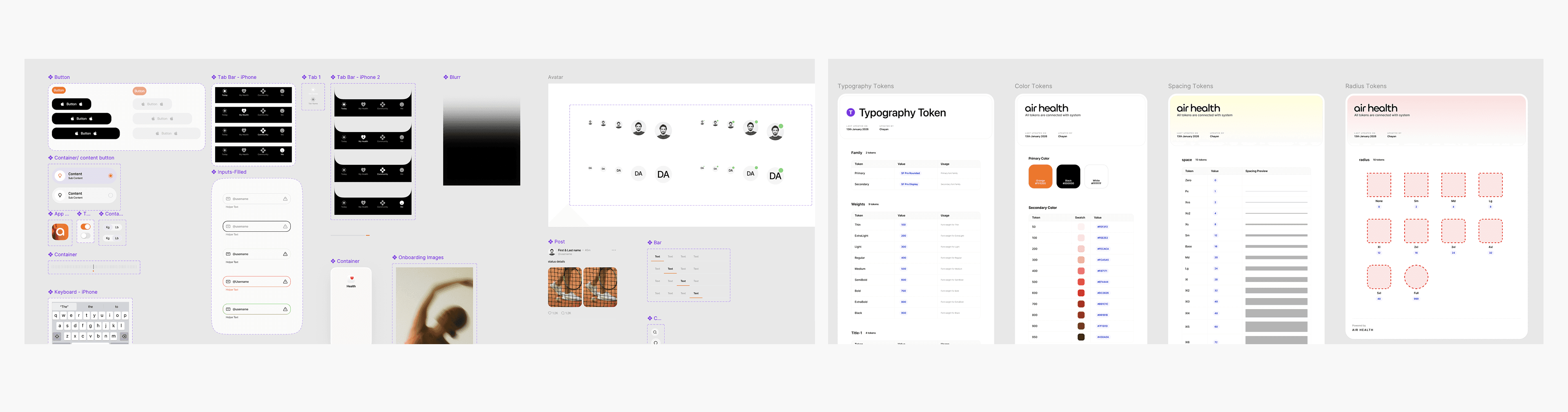
Scalable Design System & Tokens
To support AirHealth’s rapid development, I moved beyond static components to a semantic token architecture. This system maps design variables directly to code, ensuring seamless engineering handoff and 1:1 implementation accuracy for the MVP